
Find your next read
All reviews written by humansA Daughter of the Samurai
Your rating:
★★★★★★★★★★
Synopsis · not our opinion
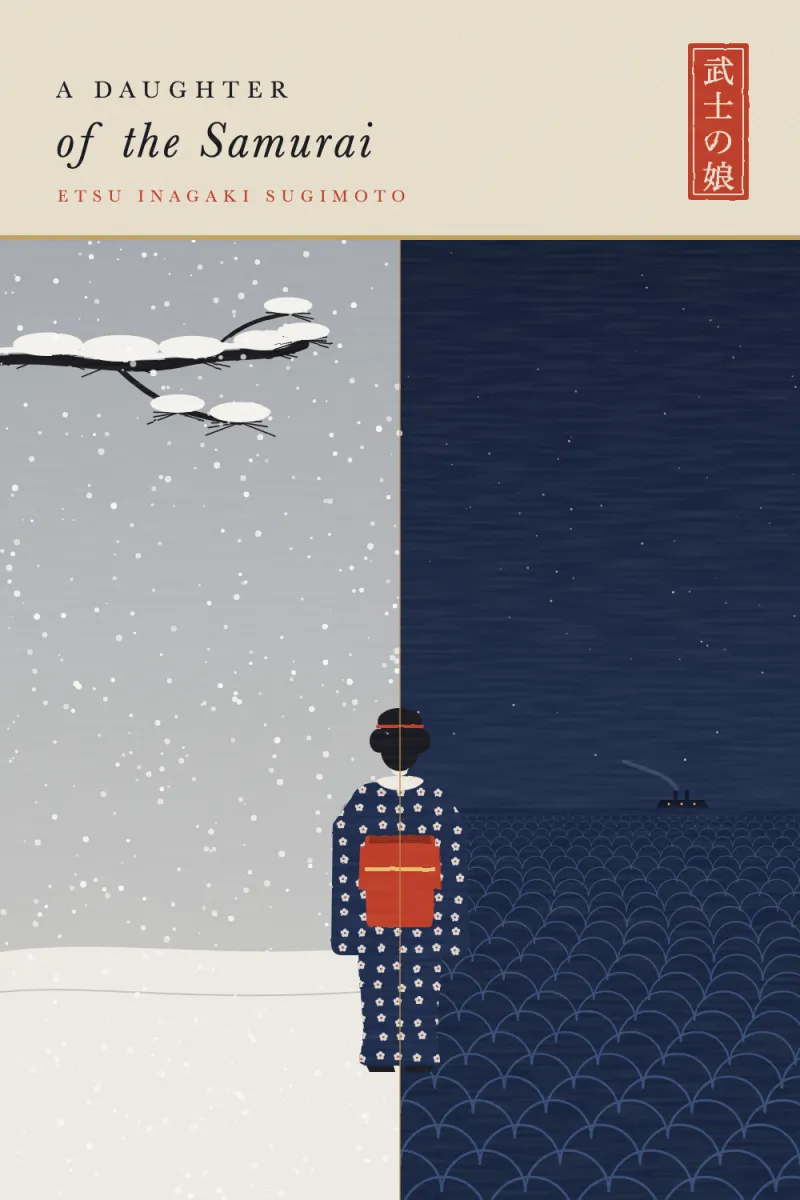
This book is an extraordinary autobiography that chronicles a young woman's journey from feudal Japan to early 20th-century America. Raised under the strict expectations and austere traditions of a samurai household, Etsu's life changes dramatically when an arranged marriage takes her across the ocean to a vastly different Western culture. As she navigates the sharp contrasts between her deeply rooted heritage and the forward-looking freedoms of her new home, she must find her own voice and balance two worlds. Heartfelt, evocative, and historically rich, this pioneer memoir is a poignant exploration of identity, duty, and cultural bridge-building.
Reviews (1) · our opinion
A
AliceOctober 16, 2026
What matters more: feelings or duty?
In the modern world, people answer this question far too unequivocally, and that shapes every area of our lives. That is why this book touched me so deeply: I do not share the modern view.
What I find endlessly fascinating in this book is how a sense of duty can be instilled in someone from childhood.
You do not have to explain the philosophy of duty to a child. The environment they grow up in has a far more powerful effect.
I imagine two families.
In the first, a child says, “I don’t want to go.” The adult replies, “Well, if it makes you uncomfortable, of course you don’t have to.” Gradually, the child learns: “How I feel is reason enough to change what I do.”
In the second family, the answer is entirely different: “I understand that you don’t feel like it. But we promised we would be there.” The feeling is not denied. It simply does not get the final say.
And if this happens thousands of times at home, at school, among peers, in the stories a child is told, in the way adults behave, an entirely different instinct takes shape.
Not “I must constantly suppress myself,” but rather “Wanting or not wanting something does not, in itself, determine what I will do.”
A culture can take this a step further: turn the ability to act against your feelings into a source of pride. Then something very powerful happens: self-control no longer feels solely like deprivation. It becomes part of your identity: “I am someone who honors their commitments.”
Etsu is a person of two cultures and “two genders”: a girl raised as a boy; a woman who lived in two diametrically opposed societies.
This is a journey into the utterly unique experience of someone who lived at the turn of a century, at the intersection of cultures, on the sharp edge of gender differences.
Holding on to her extraordinary respect for all living things and her immense curiosity about the world and its people, she was able to discover freedom within herself and take us by the hand through the incredible journey of her life. And to do so, perhaps, in an incredibly captivating and somehow exquisitely beautiful way.