Find your next read
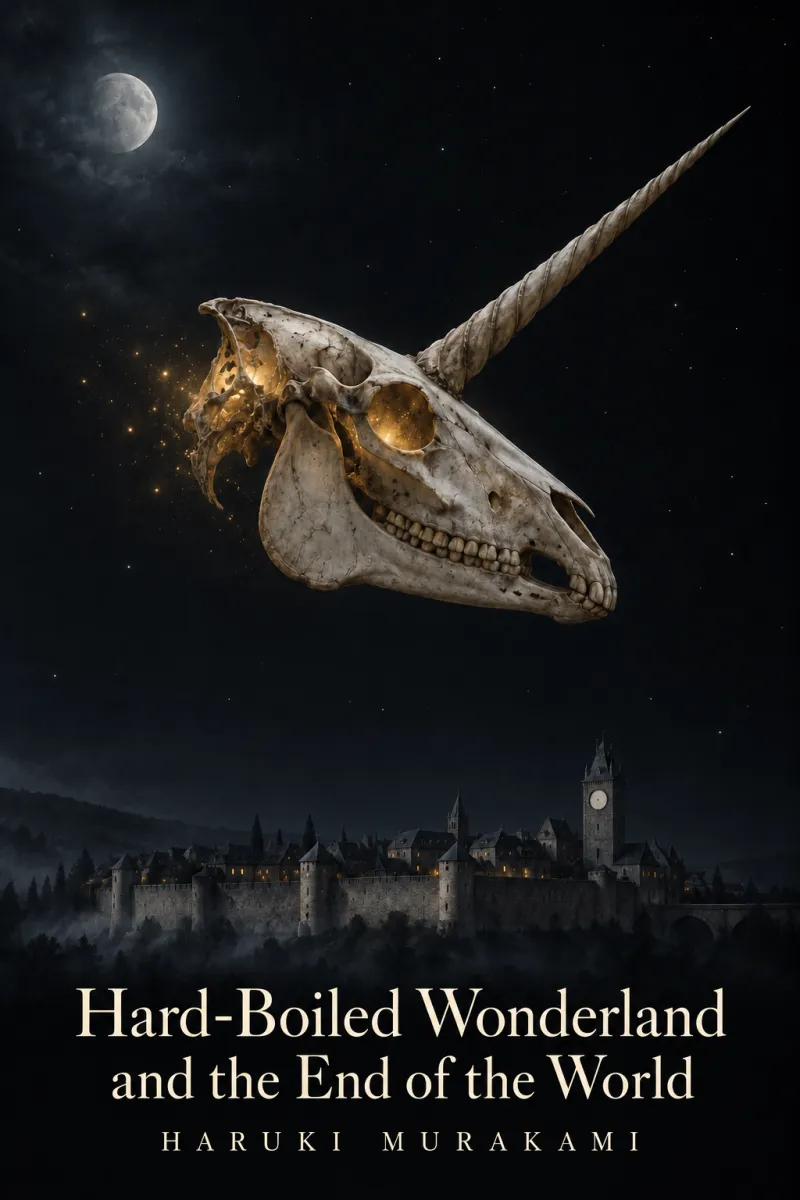
All reviews written by humansHard-Boiled Wonderland and the End of the World
Your rating:
★★★★★★★★★★
Synopsis · not our opinion
A 1985 novel by Japanese author Haruki Murakami. Its chapters alternate between two parallel narratives — Hard-Boiled Wonderland, a cyberpunk tale of a Calcutec who uses his subconscious as an encryption key in a near-future Tokyo, and The End of the World, a surreal fantasy set in a walled Town where the narrator reads dreams from unicorn skulls. The two storylines converge, exploring consciousness, the subconscious mind, and identity. Winner of the 1985 Tanizaki Prize.
Reviews (1) · our opinion
A
AliceOctober 26, 2026
I adored this book as a child. And for me, it ended exactly as it should.
Some fictional worlds stay with you long after you’ve forgotten most of what happened in them. The plot gets blurry, names disappear, but you remember what it felt like to be there. *Hard-Boiled Wonderland and the End of the World* is one of those books for me. I couldn’t give you a reliable guided tour anymore but I would recognize the place.
There’s a peculiar poetry to that place, like a quiet medieval fairy tale. Something eerie and wintry, with a stillness you can almost feel against your skin. You’d think it would make you want to leave. Instead, somehow, it feels like home.
And the ending has stayed with me just as clearly. I know it can leave you wanting something else. Another choice, perhaps. A different idea of what it means to be saved. But I never wanted to argue with it. An unusually peaceful outcome for someone who tends to have opinions.
And perhaps that’s why it feels so right to me: I understand it. I made the same choice myself. My own end of the world. My own wonderland. And I stayed there.
My name is Alice. How could I not?