Find your next read
All reviews written by humansThe Goldfinch
Your rating:
★★★★★★★★★★
Synopsis · not our opinion
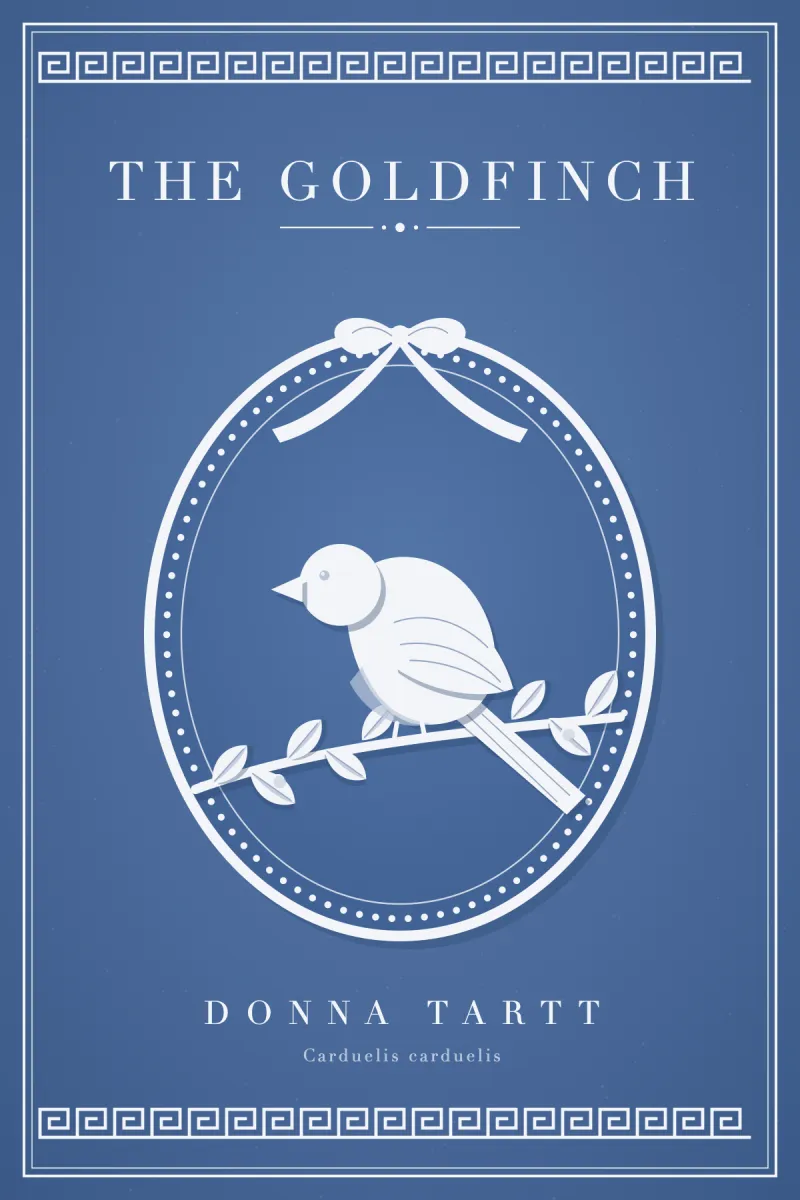
Donna Tartt’s The Goldfinch is a sweeping, intensely atmospheric, and emotionally devastating Pulitzer Prize-winning epic that traces the turbulent life of Theodore Decker. Surviving a sudden, catastrophic terrorist bombing at an art museum that claims his mother's life, thirteen-year-old Theo stumbles away from the wreckage carrying two life-altering burdens: a profound, suffocating grief and a priceless, small 1654 painting titled The Goldfinch. As Theo grows from a traumatized boy into a restless young man, he is pulled into a shadowy underground world of antique dealing, forgery, and high-stakes crime, all while desperately clinging to the painting as his sole remaining anchor to the past. Lyrical, sprawling, and psychologically complex, this modern masterpiece is a mesmerizing exploration of art, loss, destiny, and the enduring resilience of the human spirit.
Reviews (1) · our opinion
A
AliceOctober 27, 2026
For some reason, it’s very fashionable to criticize this book. For being too long. For its pacing. For a plot that feels too “adolescent.” For winning the Pulitzer. For everything, really.
But the wordiness and the sheer beauty of Tartt’s language are exactly why I read. I love slow, unhurried storytelling, the kind that lingers and takes its time. I think sequentially, analytically, one step after another. Tartt thinks in images, and I find that completely mesmerizing. Reading her feels like being pulled into a whirlpool of someone else’s emotions and impressions: a kaleidoscope of half-remembered moments and thoughts left unfinished.
The language is the best thing about this book. Honestly, the plot felt secondary to me and at times I struggled to hold on to its thread. But how this book is written matters more than what it’s about. Every page is dense with detail: the dust in an antique shop, the light in a museum, the heavy, dreamlike haze that hangs over Theo’s life after the explosion.
Maybe the plot didn’t grip me simply because the world Tartt describes is so far from my own. I was never left to fend for myself as a teenager. I never did drugs, and I never lost myself the way Theo does. And yet there was so much I recognized: life in the US, losing a parent at a young age, searching for answers and trying to find closeness in friends who were just as aimless and lost as I was.
Perhaps this is a book where form matters more than content, and perhaps it’s more modernist than many readers expect or want. But its charm was more than enough for me. I read it in one breath and I won’t be joining the chorus of critics.